

How to Use Yoga to Support Healthy Aging
January 19, 2026
Phrases like ‘50 is the new 30’ or ‘60 is the new 40’ have become very common over the past few years. And while it’s definitely true that many of us live longer and healthier than just a few decades ago, we can’t escape the fact that we’re all getting older. The good news is that yoga can help you age actively and healthily by improving mobility, balance, strength, and mental well-being.
In this blog, we talk about yoga’s specific benefits for older adults, share suitable practices, and show you how to adapt yoga safely as you get older.
Why Yoga Benefits Healthy Aging
First things first, just as yoga is accessible to practitioners of all abilities, it’s a great way to stay active, strong, and mobile at every age. No matter whether you’ve been practicing for years or are looking for a new way to improve your physical and mental well-being, yoga classes at Uptown Yoga are a great way to support your mental and physical well-being.
Practicing yoga regularly addresses some of the biggest physical and mental changes that come with aging. Here are some of the main benefits of spending time on your mat:
- Yoga improves your overall balance and stability, reducing the risk of falls as you get older.
- Practicing regularly allows you to build and maintain strength and support mobility in your joints and muscles.
- Speaking of moving joints and muscles, yoga enhances every practitioners’ flexibility. You’ll find that you enjoy a greater range of motion to help with daily tasks and reduce stiffness with regular practice.
- Yoga can also support cardiovascular health and lung function through specific breathing practices.
- On the mental side, practicing yoga reduces stress and anxiety. By calming the mind-body connection, you’ll also improve your sleep quality leaving you feeling refreshed and ready to face the day.
Generally speaking, consistency beats intensity when you practice yoga. This is especially true if you’re new to the practice and want to avoid strains and injuries.
How Yoga Helps Prevent Age-Related Risks
None of us can prevent aging, and it’s really a privilege to grow older. With that said, aging does have its challenges. Yoga can help you mitigate some of these unwanted ‘side effects’ of getting older.
Yoga addresses two of the main markers of frailty – reduced lower body strength and walking speed. Both are common signs of aging, and yoga allows you to control both and develop your strength. Falls are another risk often associated with getting older. By improving your posture and practicing simple things like rising from the floor or a chair, yoga supports your independence for years to come.
Gentle yoga poses work to improve mobility and flexibility to reduce joint pain and stiffness. You’ll also find that practicing breathing exercises enhances respiratory control and builds your stamina, improving your energy levels and endurance at the same time.
Remember that yoga is beneficial at every level. There is no need to practice at high intensity to see the benefits of your practice. Instead, it’s important to adapt your practice to yourself to move safely and effectively. Don’t hesitate to talk to our experienced instructors if you need to adapt a pose to challenge you more or less.
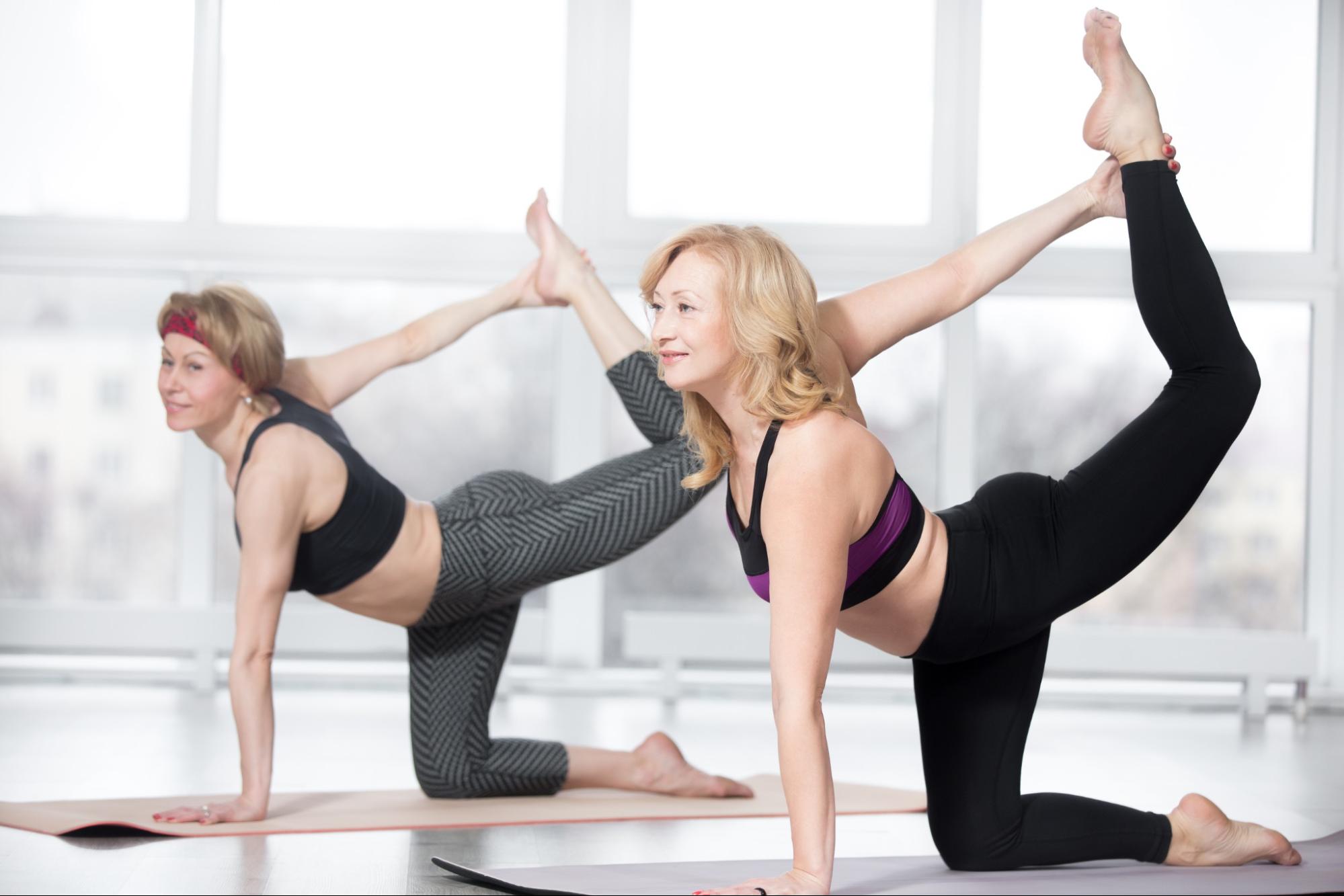
What a Healthy Aging Yoga Practice May Look Like
No two yogis are the same or have exactly the same goal for their practice. That’s true at any age, but we’re emphasising it here to remind you to avoid comparing yourself to others and putting undue pressure on yourself.
Practicing yoga to support healthy aging could mean incorporating gentle standing balance poses into your practice. Asanas like tree or mountain pose can be adapted to suit you, whether that means choosing a variation or using props like your wall or a chair.
Hip and shoulder-opening poses, low lunges, and gentle twists are excellent options for anyone looking to improve joint mobility and release soft tissues. Don’t push too hard, especially if it’s been some time since you exercised or if you find that a pose is painful. Explore the range of movement available to you and increase that range gradually over time.
Yoga props like blocks, straps, and bolsters are excellent tools to reduce strain and improve alignment. What’s more, restorative poses and breath practices can also aid recovery, relax your nervous system, and support deep, restful sleep.
If you’re new to yoga, let our instructors know! This helps us adapt poses to you and ensure that you practice safely and enjoy your time at Uptown Yoga and on your mat at home.
When and How Often to Practice
Seasoned yogis know that your practice changes over time. You’ll have years when you practice more and other times when it feels right to take a step back.
If you’re looking for a suggestion as you’re starting to practice, begin with two or three shorter sessions per week and gradually increase your sessions’ duration as you become more comfortable.
The goal is to find a sustainable routine that you enjoy consistently. Try mixing more active classes with restorative or slower sessions to allow time for recovery. Focus on mindful, controlled movement rather than speed or depth of poses. Paying attention to your breath and practicing mindful relaxation daily are great ways to build your connection with your practice.
Generally speaking, regularity matters more than pushing through discomfort as you increase your range of movement.
FAQ: Yoga and Healthy Aging
1. Is yoga safe for older adults?
Yes, yoga is generally very safe for older adults when practiced mindfully and with appropriate modifications. Many poses can be adapted using props such as blocks, chairs, or the wall to provide extra support and stability. It is always a good idea to let your instructor know about any injuries, health conditions, or concerns so they can guide you safely
2. Do I need to be flexible to start yoga as I get older?
Not at all. Flexibility is not a prerequisite for yoga. It is one of the benefits that develops gradually over time. Yoga meets you where you are, and even gentle movements can help improve mobility, reduce stiffness, and increase your range of motion with consistent practice.
3. Which styles of yoga are best for healthy aging?
Gentle, slower-paced styles such as Hatha, Restorative, Deep Stretch, Yin, or Slow Flow are often ideal for supporting healthy aging. These classes focus on mindful movement, balance, breath awareness, and relaxation. Many practitioners also enjoy a mix of styles depending on their energy levels and personal goals..
4. How often should older adults practice yoga?
Practicing yoga two to three times per week is a great place to start. Short, consistent sessions tend to be more beneficial than infrequent, intense practices. As your comfort and confidence grow, you can increase frequency or duration while continuing to listen to your body.
5. What if I have joint pain or limited mobility?
Yoga can be adapted to suit almost any level of mobility. Gentle poses, smaller ranges of motion, and the use of props can help reduce strain on the joints while still offering the benefits of movement and breathwork. Pain should never be ignored. If something does not feel right, ease out of the pose and ask your instructor for an alternative.
6. Is it ever too late to start yoga?
Absolutely not. Yoga is a lifelong practice that can be started at any age. Whether you are new to movement or returning after a long break, yoga offers a supportive and adaptable way to stay active, improve well-being, and age with strength, balance, and confidence.
Getting Started With Yoga At Every Age
It’s never too late to start practicing yoga and enjoying the benefits for healthy aging. If this is your first time on the mat or if it’s been some time since you enjoyed any movement practice, make sure you begin with kindness, patience, and consistency. Explore different classes at Uptown Yoga to find your favorite style of yoga practice to support mobility, balance, strength, and overall well-being. We welcome students at all life stages and are always happy to offer modifications and help you practice safely and joyfully.