

Yoga for Athletes: Improving Performance and Preventing Injuries
January 15, 2026
What’s your favourite sport? For some of us, the answer is yoga, but for others, running, fitness, or ball sports are more important. If that sounds like you, consider adding yoga to your routine to enhance your performance, reduce the risk of injury, and improve recovery between tough training sessions. Yoga has physical, mental, and biomechanical benefits that are worth discovering no matter what your main sport is. Read on for practical tips and tricks to help you add yoga to your training strategy.
Why Yoga Supports Athletic Performance
Yoga helps athletes by a multitude of elements that are essential for sports performance. Think about increased flexibility, better balance, greater core strength, and improved body awareness, to name just a few. In addition, practicing yoga can help your lungs function better, and it’s an excellent option to incorporate movement in your recovery or rest days.
Here is a closer look at yoga’s performance benefits:
- Practicing yoga leads to greater flexibility and helps mobilize your joints. As a result, you move more efficiently and reduce strain from other workouts.
- Breathwork and asanas can improve your balance, proprioception, and stability, all reducing your risk of falls, missteps, or injuries.
- Yoga poses enhance your posture and alignment throughout your body, supporting better movement mechanics as you push yourself harder.
- Aside from physical benefits, yoga also supports mental clarity and focus. As a consequence, you’ll be able to not only control but use your breath more efficiently. Plus, you’ll improve your stress resilience during workouts and beyond.
- Yoga also helps you recover faster and more efficiently. Practicing even a few poses can lead to increased circulation, optimized nutrient delivery, and faster muscle recovery.
Think of yoga as more than an add-on to your workout routine. Practicing enhances how your entire body functions during any athletic work.
How Yoga Can Prevent and Reduce Injuries
Most people who practice sport for a long time and push themselves hard have suffered a sports injury at some point. Adding yoga to your routine can help you avoid some of the most common injuries through a combination of control, balance, and awareness. If you do suffer an injury, practicing restorative yoga is an excellent way to recover sooner and come back even stronger.
Yoga’s main injury prevention mechanisms include balancing strength and increasing flexibility to reduce muscle imbalances. Most of us have a stronger and a weaker side. Yoga can help even out those differences.
You can also use your yoga practice to train the stabilizing muscles around major joints like your hips, knees, and shoulders. Any yoga class at Uptown Yoga encourages you to move mindfully, noticing your body’s response and avoiding overuse of muscles and joints as well as abrupts, uncontrolled movements that could lead to injury.
Practicing yoga allows you to access connective tissues and build their resilience, allowing your joints and muscles to access their entire range of movement. Because yoga poses can help reduce inflammation and stiffness, they are highly effective as part of your recovery protocols after challenging workouts or even injuries.
One of the most effective ways of using yoga for recovery and injury prevention is to view it as a proactive safety investment rather than a purely corrective tool.
Practical Restorative Yoga Practices for Athletes
Yoga to support athletic performance and prevent injury, or support recovery doesn’t need to be complicated, whether you’re already an experienced yogi or are just starting to look at integrating this practice into your routine.
Some of the most powerful poses are also the most accessible. Here are a few examples, but if you’re new to yoga, don’t hesitate to book an ‘all level’ or a specific beginner-friendly class and share your goals with our experienced instructors. We’re always happy to help you get more out of your yoga practice and your other sports.
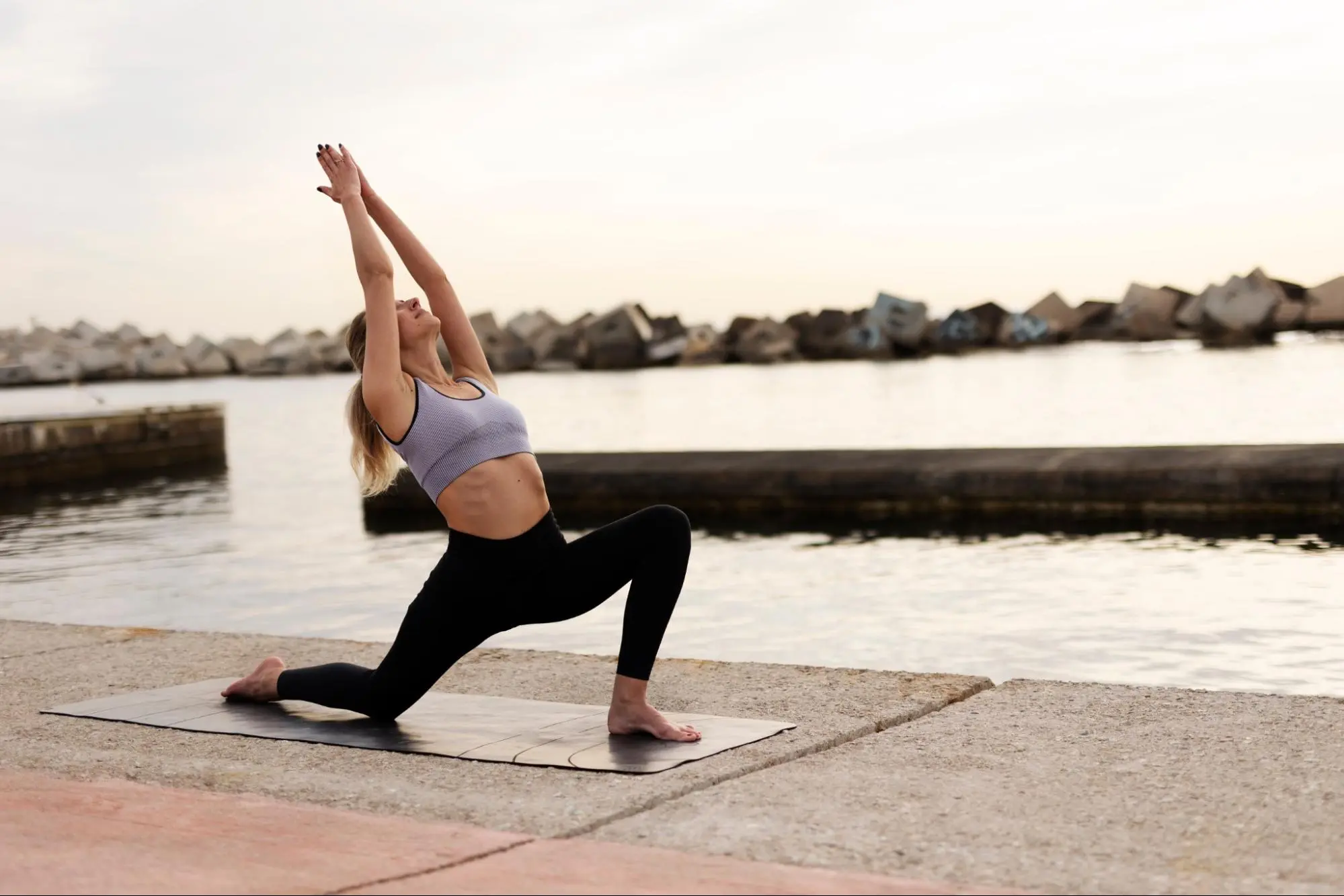
Many athletes suffer from tightness, especially after challenging workouts. Restorative yoga poses like low lunge variations and hip-opening asanas are excellent to help release tight hip flexors, for example. Poses like pigeon or sleeping swan pose allow you to open and loosen your glutes and your hips gently. These are also great ways to bring some movement into your body after a sedentary day.
Twists are an excellent way to improve core and spinal mobility. Start by working inside a comfortable range and extend your practice gradually. As muscles and joints release accumulated tension, you’ll also benefit from better circulation and oxygen flow for natural healing.
To increase focus and emotional balance, consider adding variations of tree poses and asanas like warrior III. By challenging physical stability, these poses calm the nervous system, improve your balance, and work to prevent trips and falls.
After a challenging workout, poses like supported savasana variations or legs-up-the-wall allow your muscles and joints to relax and aid post-workout recovery. They also give you the space you need to reflect on your day and reset mentally.
When and How to Integrate Yoga into Your Training
You may not be a professional, but most ambitious athletes follow a weekly schedule. When adding yoga into that schedule, you want to avoid competing with existing activities and overburdening the body.
To achieve this, try using yoga on rest and active recovery days to stay mobile without adding impact. Think about shorter yoga sessions lasting 15 or 30 minutes and focusing on mobility after your workout.
If you have more time, a longer but gentler practice is a great option to let your body experience deep rest. Intense yoga styles like power or hot yoga are generally not the best choice after heavy training or on dedicated rest days, and it’s important to listen to your body’s fatigue signals and choose your practice’s intensity accordingly. Remember the goal is for your yoga practice to support, not compete with, athletic efforts. Slower recovery days are not a pause from progress but instead a vital part of building long-term strength and clarity.
FAQ: Adding Yoga to Athletic Training
1.Can yoga really improve athletic performance?
Yes. Yoga supports athletic performance by improving flexibility, balance, core strength, posture, and body awareness. These elements help you move more efficiently, reduce unnecessary strain, and perform better across a wide range of sports. Yoga also supports breathing efficiency and mental focus, both of which are essential during training and competition.
2. How often should athletes practice yoga?
This depends on your training schedule and goals, but many athletes benefit from practicing yoga one to three times per week. Shorter sessions can be used after workouts or on rest days, while longer and gentler classes are ideal for recovery. Consistency is more important than intensity.
3. Should yoga replace stretching in my routine?
Yoga can replace or enhance traditional stretching, as it combines mobility work with strength, balance, and breath awareness. Unlike static stretching alone, yoga encourages active engagement and mindful movement, which supports better long term results and reduced injury risk.
4. What type of yoga is best for athletes?
Gentle flow, deep stretch, restorative, and mobility focused classes are often the most beneficial for athletes. These styles support flexibility, joint health, and recovery without overloading the body. More intense styles may be appropriate at times, but they should be used strategically and not on heavy training or rest days.
5. Can yoga help prevent sports injuries?
Yes. Yoga helps reduce injury risk by balancing strength and flexibility, improving posture and alignment, and strengthening stabilising muscles around major joints. It also increases body awareness, helping you recognise early signs of fatigue or imbalance before they lead to injury.
6. Is yoga helpful during injury recovery?
Yoga can be very effective during recovery when practiced appropriately. Restorative and gentle yoga styles help reduce stiffness, improve circulation, and support healing without adding impact. Always inform your instructor about any injuries so poses can be adapted safely.
Are You Ready to Add Yoga to Your Training Schedule?
Integrating yoga into athletic training can unlock better performance, durability, and mental clarity. To get started, join an all-level or a deep stretch class at Uptown Yoga today or consider a private yoga session to access another dimension of your training today. Yoga has the potential to help you train smarter, move better, and stay healthier.