

10 Yoga Poses to Enhance Focus and Productivity
February 9, 2026
How well can you concentrate? Maintaining focus and productivity in today’s fast-paced, screen-driven world has become increasingly challenging. Constant notifications from various devices, long hours of sitting in front of a screen, and mental overload often lead to fatigue, stress, and reduced concentration.
Yoga offers you a natural and effective way to counter these challenges by combining mindful movement, breath control, and mental awareness. Specific yoga poses allow you to release physical tension while your mind becomes calmer and more alert at the same time. Start practicing yoga regularly and you’ll be able to train attention, reduce distractions, and support a sustainable level of productivity in your work and personal life.
Why Yoga Helps Improve Focus and Productivity
Most of us are familiar with this scenario – you have a foot-long to-do list, deadlines are coming closer, and you’re trying hard to focus on the tasks in front of you. But your mind just doesn’t seem to settle. It’s racing, and rather than focusing on the task in front of you, you’re jumping between different priorities.
As a result, you feel wired rather than focused. Instead of working productively, you surrender to fatigue and end your day feeling frustrated and anxious. Forcing concentration simply doesn’t work for most people, because your central nervous system remains overstimulated.
Yoga can help you calm your nervous system and connect with your breath to release tension and anxiety, allowing you to minimize stress-related distractions. Developing greater awareness of your breath helps you sustain attention and increase your focus on any given task.
Aside from using your breath, you can use a selection of balance and seated poses to help you build and improve mental discipline and clarity.
Try the following ten poses to connect your body, mind, and breath – and notice how your productivity grows and focus expands.
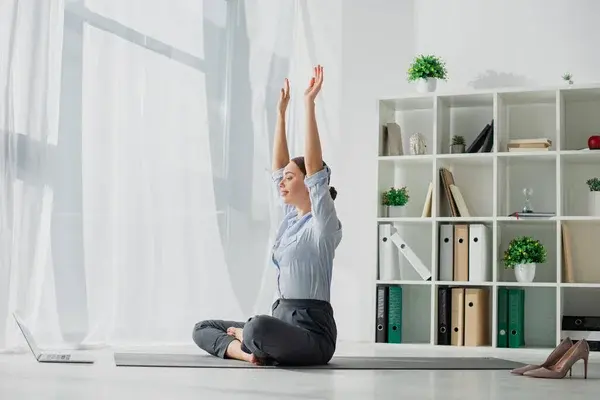
10 Yoga Poses for Focus and Productivity
1. Tree Pose (Vrikshasana)
This pose is all about building balance and concentrating on a single point. Standing tall with your feet hip-width apart allows you to ground yourself before shifting your weight on to one foot and place the sole of the other foot against your standing leg’s thigh.
Breathe slowly and steadily as you fix your gaze ahead of you. Stay in this pose for several breaths to keep your awareness in the present moment and encourage your mind to stay steady.
2. Downward-Facing Dog (Adho Mukha Svanasana)
If you have attended even one single yoga class, chances are you will have practiced this asana. Downward-facing dog has multiple physical and mental benefits as well as being an excellent way to transition between poses during our Uptown Yoga flow classes.
When it comes to growing your focus, downward-facing dog improves blood flow to your brain which refreshes your mind and reduces overall mental fatigue. As you settle into the pose, inhale to raise your hips and lengthen your spine and exhale to let your heels drop and ground yourself.
3. Seated Forward Bend (Paschimottanasana)
Seated forward bend poses have the power to calm your mind and your nervous system, allowing you to release stress and mental tension. The key to unlocking their potential is to extend your exhale beyond your inhale to encourage relaxation. Physically, try to keep your back straight and bend your knees to keep your chest open rather than collapsing toward your knees.
4. Warrior II (Virabhadrasana II)
Warrior II helps you build body awareness and increase mental stamina and overall alertness. If you’re new to yoga or haven’t practiced for a while, ask one of our experienced instructors to check your alignment and make small adjustments, if necessary.
Try to keep your breaths strong and even as you settle into your pose and ground yourself through the soles of your feet. While this is a very accessible pose for all levels of practitioner, it remains challenging, because it requires sustained body awareness and focus.
5. Child’s Pose (Balasana)
One of the most powerful restorative poses, child’s pose reduces overwhelm and releases mental fatigue that helps you reset your focus. Talk to our instructors about the best variations for you and remember to take deep belly breaths as you allow stress to melt away with every exhale.
6. Eagle Pose (Garudasana)
Balance, coordination, and concentration all combined in one single asana. This is what eagle pose can do for you. If you’re brand-new to yoga and find this pose too challenging, try getting comfortable practicing tree pose first.
Move your limbs slowly as you settle into this pose and keep your breaths controlled and steady. Reach your arms up on your inbreath and settle more deeply when you exhale.
7. Headstand (Sirsasana)
Headstands are among the more advanced inversions. If you’re new to yoga or unsure about going upside-down, ask an instructor for help or practice other asanas until you build your confidence.
Headstands stimulate blood flow to the brain and enhance mental discipline and clarity. To get started, use a wall for support or practice with a partner. Keep your breathing calm and slow as you find your balance and increase stability.
8. Lotus Pose (Padmasana)
Half lotus or full lotus poses are often associated with meditation. Sitting comfortably encourages mental stillness and awareness, but you don’t need to force your body into a lotus pose if you’re not ready. Explore what is available to you and build up gradually while staying aware of your inhales and exhales.
9. Easy Pose (Sukhasana) with Breath Awareness
Easy pose, a comfortable, cross-legged seat, is a great position to start in if you’re planning to practice meditation or generally increase your awareness.
Sit tall with a straight spine and relax your shoulders. You may find that your back and neck become tense after a while. Try to observe your breath, soften your face, and encourage your shoulders to relax again and again until your body becomes used to sitting in this pose.
10. Corpse Pose (Savasana)
There is a good reason that we end many of our classes in savasana. Lying on your mat and allowing your bones to melt into the floor helps you integrate the physical and mental benefits of your practice.
The stillness of the pose lets your body process the movements that came before, improves mental clarity, and reduces burnout. Try to let go of any remaining tension and breathe naturally and effortlessly to maximize the benefits of savasana.
Final Thoughts
Incorporating yoga into your daily routine does not require long hours or advanced practice. Even ten to 20 minutes a day can make a noticeable difference in focus and productivity. Consistency is the key. By practicing poses that encourage balance, breath awareness, and mental stillness regularly, your mind becomes more resilient to distractions and stress. Over time, yoga helps cultivate clarity, calmness, and sustained attention, supporting better work performance and overall well-being. Start making yoga a regular habit today by booking an Uptown Yoga class and take a powerful step toward a more focused, productive, and balanced lifestyle.
FAQ: Yoga Poses to Enhance Focus and Productivity
1. Does yoga help improve focus?
Yes, yoga improves focus by combining physical poses, controlled breathing, and meditation to strengthen attention and reduce stress. Studies show gains in reaction time, working memory, and executive function, especially in practices that train the mind to refocus amid distractions. It’s particularly effective for countering mental fatigue from daily stressors.
2. Which yoga is best for focus and concentration?
Hatha, restorative, or yoga nidra work best, as their slow pace emphasizes breathwork and meditation over intense exercise. These styles calm the nervous system, outperforming vigorous flows like Ashtanga for sustained concentration. Add pranayama (breathing exercises) for quicker mental clarity.
3. How long to see focus improvements?
Expect noticeable gains after 6-12 weeks of consistent practice, such as 2-3 sessions per week. Trials confirm better attention and memory in that timeframe, though some feel calmer within days. Longer programs (up to 24 weeks) yield deeper cognitive benefits.
4. Can beginners practice yoga for concentration and productivity?
Yes, beginners can safely start with gentle Hatha or restorative classes to build concentration. Research includes novices who saw attention improvements without prior experience. Focus on short, guided sessions to avoid overwhelm and ensure steady progress