

Benefits of Restorative Yoga and How to Practice It
December 15, 2025
What does your yoga practice do for you? For many practitioners, yoga is a great way of keeping fit, staying flexible, and improving their overall mobility. But there is a different side to practicing yoga – a calm and gentle healing practice that supports deep rest, can help relieve stress, and leave you feeling rejuvenated. Restorative yoga is easily accessible for beginners and seasoned practitioners, and it’s an ideal complement to active flow-based classes. At Uptown Yoga, we believe that this is a style of yoga every practitioner should try. Read on for more.
Why Restorative Yoga Benefits the Whole Body
Restorative yoga is a slow-paced, gentle yoga practice that supports deep relaxation, recovery, and healing every time you get on your mat. By using props to support your body and encouraging stillness through longer holds of naturally nurturing poses, restorative yoga classes help calm down your nervous system to reduce overall stress and anxiety.
Reducing your fight-or-flight response and activating your parasympathetic nervous system is one of the core benefits of restorative yoga. As a result, your heart rate and your blood pressure may drop, further promoting deep relaxation. Practiced regularly, just a few minutes of restorative yoga can help relieve chronic tension and soreness throughout your body and improve sleep quality.
You might also find that your mood lifts. If you’re looking to establish or expand your mindfulness practice, restorative yoga offers a gateway toward greater inner balance and increased mindfulness through sustained stillness.
This true sense of restoration only happens when your body feels completely supported and safe to let go of any effort.
How Restorative Yoga Differs from Other Styles
Restorative yoga is not about challenging your body to achieve new and more complex poses. It’s about the opposite: giving your body the confidence to truly let go and rest deeply.
When you join an Uptown Yoga class, you’ll experience some of this relaxation at the end of each class when we encourage you to rest in Savasana. During our Slow Flow and Deep Stretch classes, we put greater focus on a slower pace and achieving a deep level of rest.
To help you let go of daily stressors and calm your nervous system, we encourage you to use props like bolsters, blankets, and yoga blocks to fully support your body. Our instructors will generally take you through fewer poses during these classes, instead encouraging you to hold each pose for longer, sometimes a few minutes.
We’ll focus less on effort and more on comfort and relaxation. Our goal is to replenish your body’s energy stores rather than depleting them.
Restorative Yoga for Stress Relief and Recovery
Restorative yoga can do more than help you release daily stress. Practicing yoga this way contributes to your recovery from tough workouts, injuries, and emotional fatigue.
Restorative poses allow your muscles and joints to release accumulated tension. Because this yoga practice promotes circulation and oxygen flow to your organs which supports natural healing. A calmer nervous system supports emotional balance and creates space for reflection and a mental reset.
By using restorative yoga as part of your stress relief and recovery strategy, you can continue practicing yoga while recovering. You’ll build strength and improve your mental clarity without overdoing it.
How to Practice Restorative Yoga
If you’re unsure where to start, why not book a Deep Stretch or Slow Flow class today? You’re also always welcome to speak to our experienced team about adding more restorative poses into your personal practice.
If you’re ready to start practicing restorative yoga today, here are four simple poses to try:
- Legs-up-the-wall (Viparita Karani): lie on your mat with your buttocks against the wall. Raise your legs against the wall and rest them there. This simple pose encourages blood circulation, relieves heavy legs at the end of a long day and calms your mind.
- Reclining Bound Angle Pose (Supta Baddha Konasana): lie on your mat with your knees bent. Keeping the soles of your feet together, drop your knees out to the side. If that feels too strong on your hips, consider supporting your knees with a block or a blanket. Stay in this pose for a few minutes and see if your hips begin to open more as you relax.
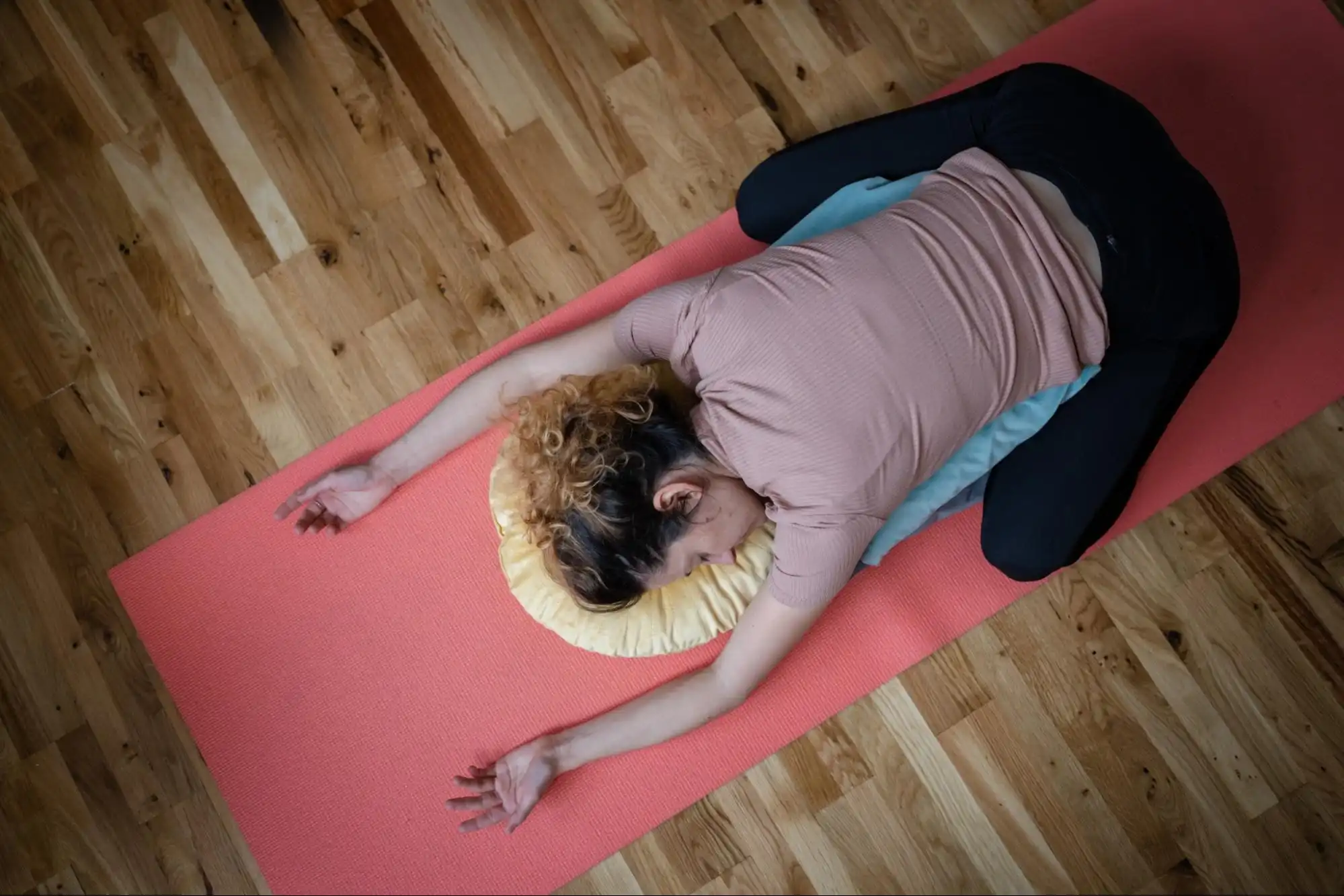
- Supported Child’s Pose: this is a great pose for anyone carrying tension in their back and shoulders. Reach for a yoga block, a bolster, or a blanket to rest your head on as you allow your body to melt into the floor.
- Supported Savasana: just as you can use props to increase relaxation when you practice your child’s pose, you can also use them to vary your Savasana pose. Consider adding a bolster below your knees or between your shoulders to relax more deeply.
Remember that any restorative yoga practice should feel supported and effortless, allowing your breath to guide and deepen your relaxation as you recharge. There are no goals here except for healing and renewal – or a deeper level of stress relief.
FAQ: Restorative Yoga
1. What is restorative yoga?
Restorative yoga is a slow-paced, gentle practice focused on deep relaxation, recovery, and healing. It uses props like bolsters, blankets, and yoga blocks to support the body in nurturing poses held for longer periods, promoting stress relief, relaxation, and mindfulness.
2. How is restorative yoga different from other styles?
Unlike more dynamic yoga styles like Vinyasa or Ashtanga, restorative yoga prioritizes rest and relaxation over movement. The goal is to encourage stillness and comfort, allowing the body to recover and recharge rather than focusing on building strength or flexibility.
3. Can restorative yoga help with stress or anxiety?
Yes! Restorative yoga activates the parasympathetic nervous system, which helps reduce the fight-or-flight response. This leads to lower heart rates and blood pressure, helping to calm the mind, relieve stress, and reduce anxiety.
4. How long should I hold each pose in restorative yoga?
In restorative yoga, poses are often held for several minutes, allowing the body to fully relax and experience deep restoration. The duration can vary depending on the class or your personal practice, but it’s always about comfort and deep relaxation.
5. Can I practice restorative yoga at home?
Absolutely! Restorative yoga is perfect for home practice, especially if you have props like blankets or bolsters. It’s about creating a safe, supported environment where you can let go of stress and focus on relaxation.
Final Thoughts
Recovery and renewal come from rest, not effort. While many of us tend to ‘power through’ our challenges, sometimes it’s important to take a step back and allow our bodies to slow down and reset before picking up the pace again.
Whether you practice at home or join a class at one of our Uptown Yoga studios, restorative yoga offers practitioners a safe, supportive way to restore or strengthen your balance through stillness, breath, and comfort. You can also join us online at a time that suits you. There’s never a bad time to slow down, soften, and recharge.