Navasana (Boat Pose) Variations
1. Bent-Knee Boat Pose
This variation is perfect if full Navasana feels challenging, as it reduces pressure on your lower back while still engaging your core.
- Sit tall with your knees bent and feet slightly lifted off the floor.
- Extend your arms forward, hold the backs of your thighs, or place your hands behind you for support.
- Focus on lifting your chest and lengthening your spine instead of collapsing forward.
Practicing this version helps you build strength gradually and prepares your body for the full Boat Pose.
2. Half Boat Pose
Half Boat Pose is a supportive option that gives you more stability while learning the balance and core control needed for Navasana.
- Begin as if you are moving into the full pose, but keep your feet on the ground.
- If you like, lift one leg at a time, either bent or straight.
- Use your hands for support: hold the backs of your thighs or place your palms on the floor behind you.
- Try switching legs with each exhale to link movement with breath.
This variation strengthens your core step by step while letting you stay mindful of posture and alignment.
Doing Navasana Yoga Pose Step-By-Step
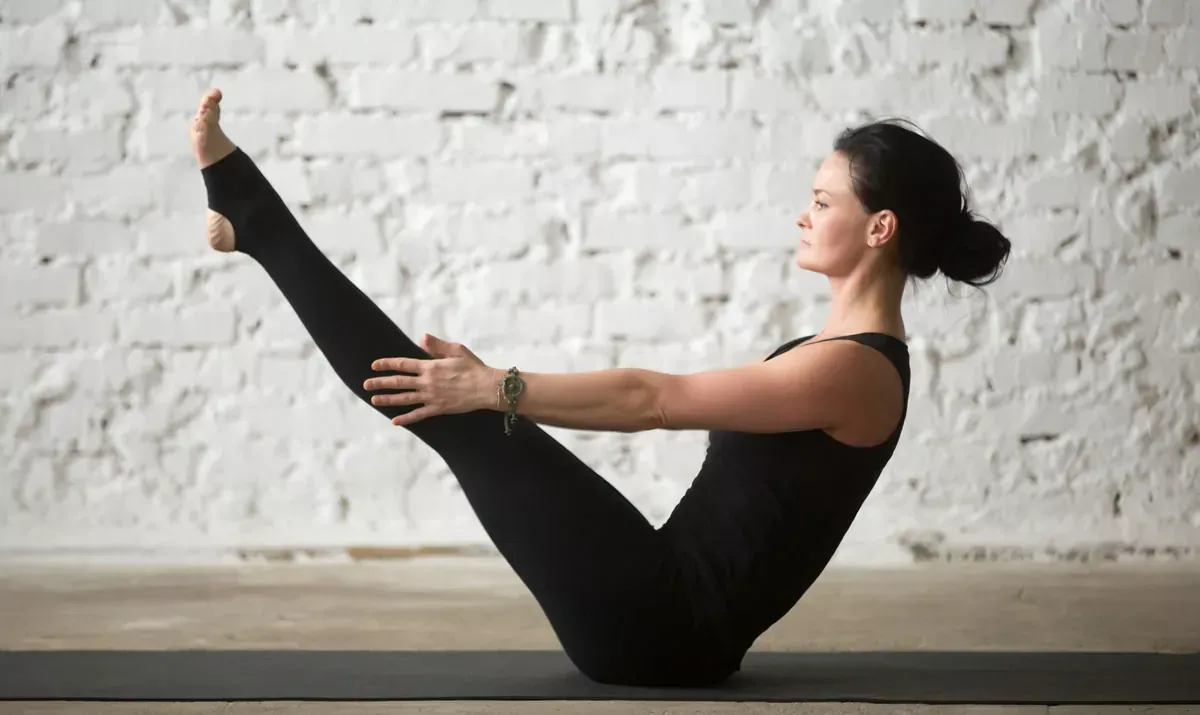
Navasana is the yoga pose where you mimic the shape of a boat. Actually, you are forming a triangular shape that balances your body with the weight of your legs and back supported by your tailbone, with your hands holding your thighs.
Here's how you do it:
- Before you start your yoga practice, find a good area where you can do it without any distractions from all around you.
- Lie down flat on your yoga mat with your feet together and arms by your sides.
- Keep your arms straight with your fingers outstretched towards your toes.
- When you start your breathing, lift your chest and feet off the mat once you exhale while stretching your arms towards your feet. Once you do that, you will start feeling the tension as the abdominal muscles in your stomach contract.
- The weight of your body and legs will concentrate on your buttocks. Don't forget to keep your fingers and toes in line with your eye contact. Remain in that position for about 10-30 seconds or more while you're holding your breath.
- Slowly but surely exhale as you bring your body back to its starting position and relax. You can do three or four repetitions daily. Don't overdo it.
Instructor Tips
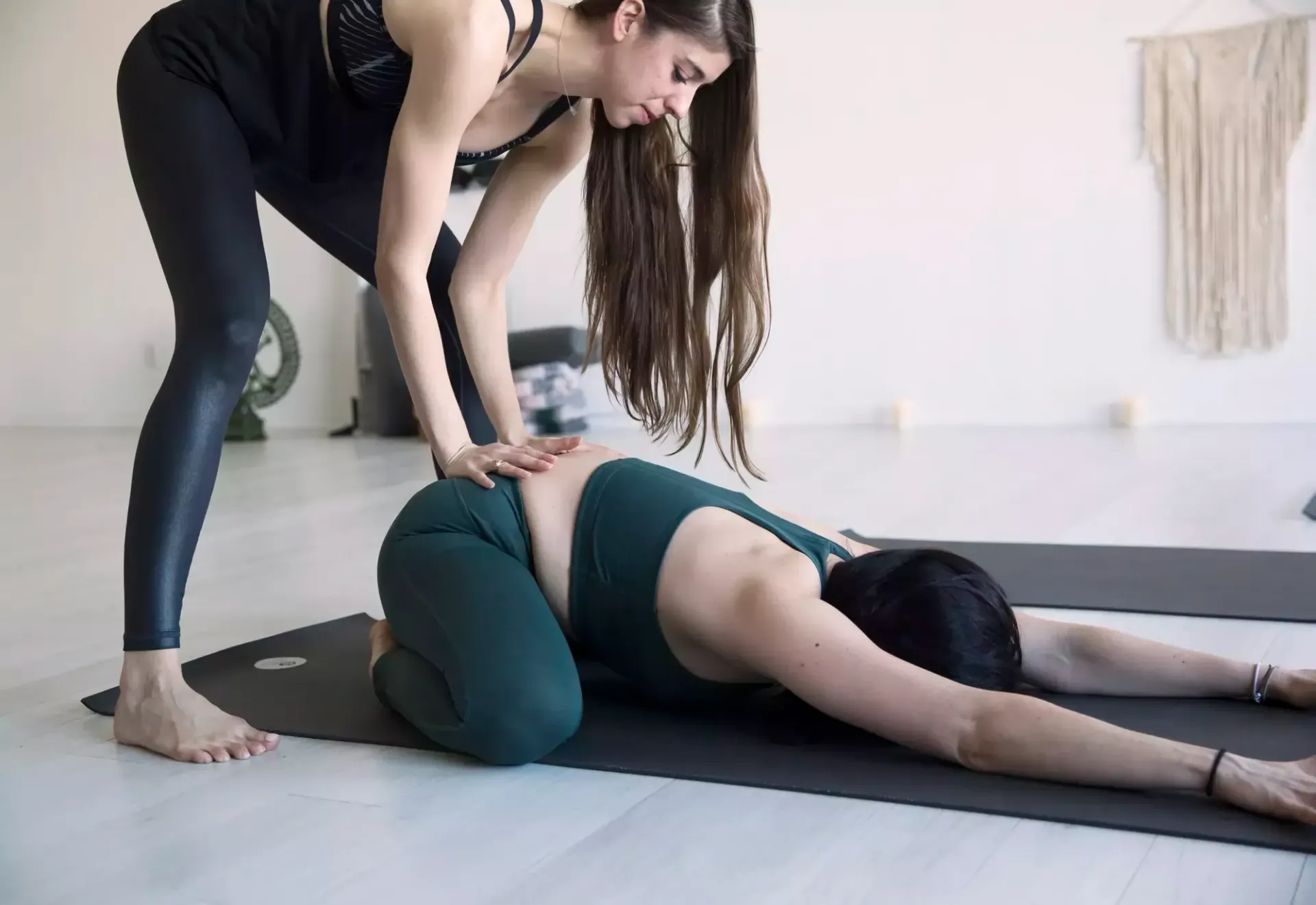
These tips will help protect your students from injury and help them feel more confident in the navasana yoga pose:
- Begin with a few gentle core warm-ups like Cat-Cow or low boat to prep the body before moving into full navasana.
- If students feel tension in their neck or shoulders, remind them to relax their shoulders away from their ears and keep their chest open.
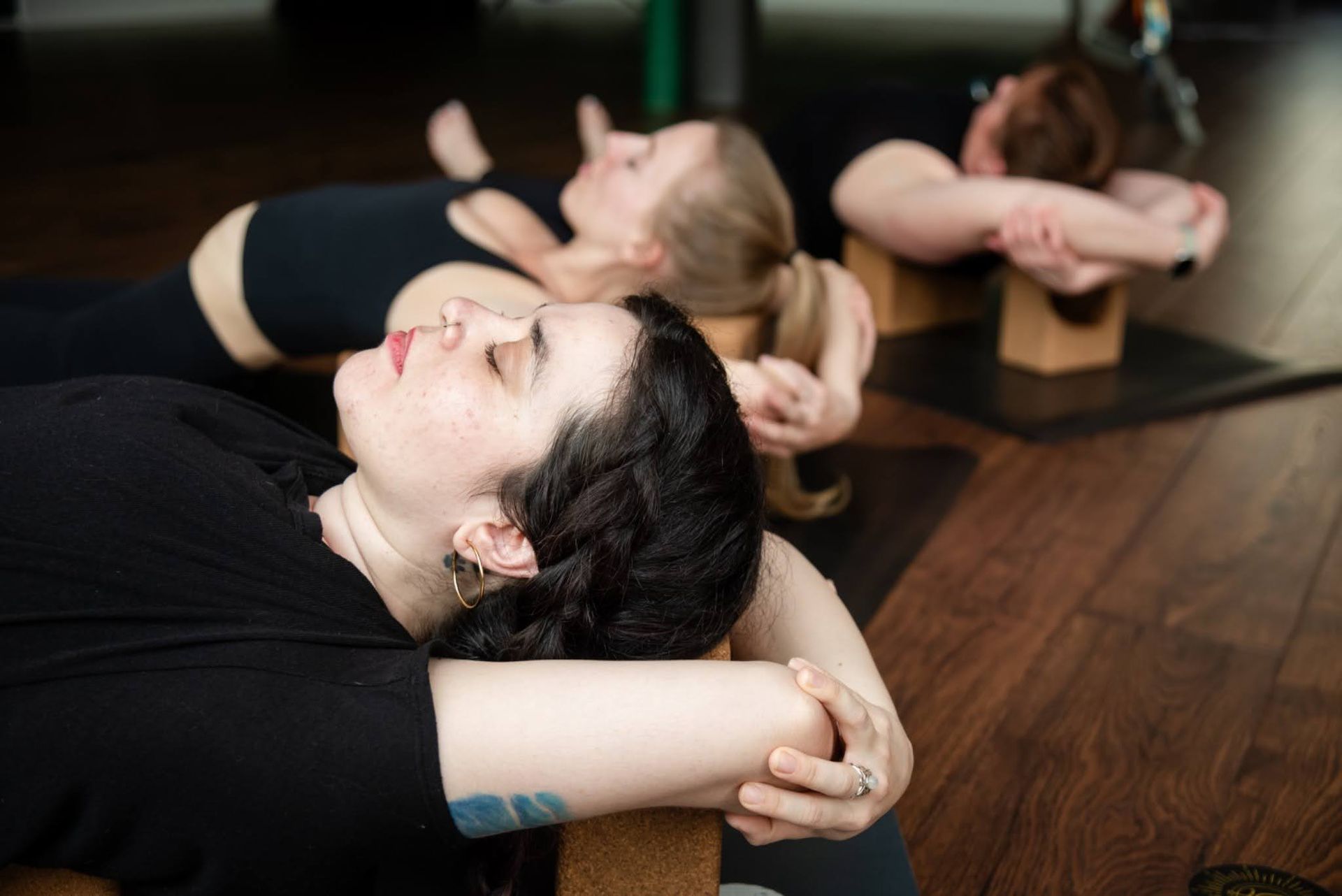
- For those who tend to collapse in the lower back, suggest placing a folded blanket or block under the sit bones to support a lifted spine and better alignment.
Proceed with Caution
If you ask a yoga teacher in Dallas or anywhere else, they would definitely prevent someone from doing the Navasana yoga pose if they have neck injuries, stomach issues, breathing difficulties, or cardiovascular diseases. Pregnant women are also discouraged as a
health precaution.
Navasana Yoga Pose Benefits
So why should you incorporate performing the Navasana (boat) pose in your daily yoga exercises?
- Build your abdominal strength and reduce back pain
Navasana builds incredible core strength. Such strength helps us feel more supported in all of our daily activities. Done properly, it can also reduce back pain and leave you with much better posture and balance. If you are experiencing back pain, practice with your knees bent and support yourself with your fingertips on the ground until you are a bit stronger. Keeping the back straight is very important. - Focuses your mind
Practicing challenging poses, such as Navasana, you can't think about anything else other than the task at hand. When you close yourself off from all your daily worries and distractions, you'll find a more focused, yet relaxed,
mind.
With consistent practice, you will be able to think and communicate more clearly. - Aids with Digestion
Navasana helps stimulate the digestive system and helps build the digestive fire. In Ayurveda, keeping the digestive fire strong is key to nutrient absorption, assimilation, and keeping everything moving healthily. Try adding Kapalbhati breathing (breath of life) to this for an extra boost and to build heat.
Want to learn more advanced techniques and poses?
Visit Uptown Yoga, where we provide
the best yoga classes in Dallas
with a variety of lessons suited to fit your needs and preferences.