Acro Yoga: A New Way to Get Strong and Strengthen Connections

Even the most dedicated yoga practitioners can hit a roadblock from time to time. Often for no apparent reason, their practice may start feeling a little stale, and what used to be a helpful routine has turned into a case of going through the motions. 


When that happens, trying a new instructor or style of yoga can help, but you could also look a little further and consider a multidisciplinary approach like acro yoga. As the name suggests, acro yoga combines acrobatics and yoga. In addition, practitioners also complete trust-building exercises before quite literally taking their practice to new heights. 


The biggest difference between acro yoga and pure acrobatics is the emphasis on how the practitioners move rather than which position they achieve. Building a deeper connection and moving mindfully is essential to successful and safe acro yoga.   

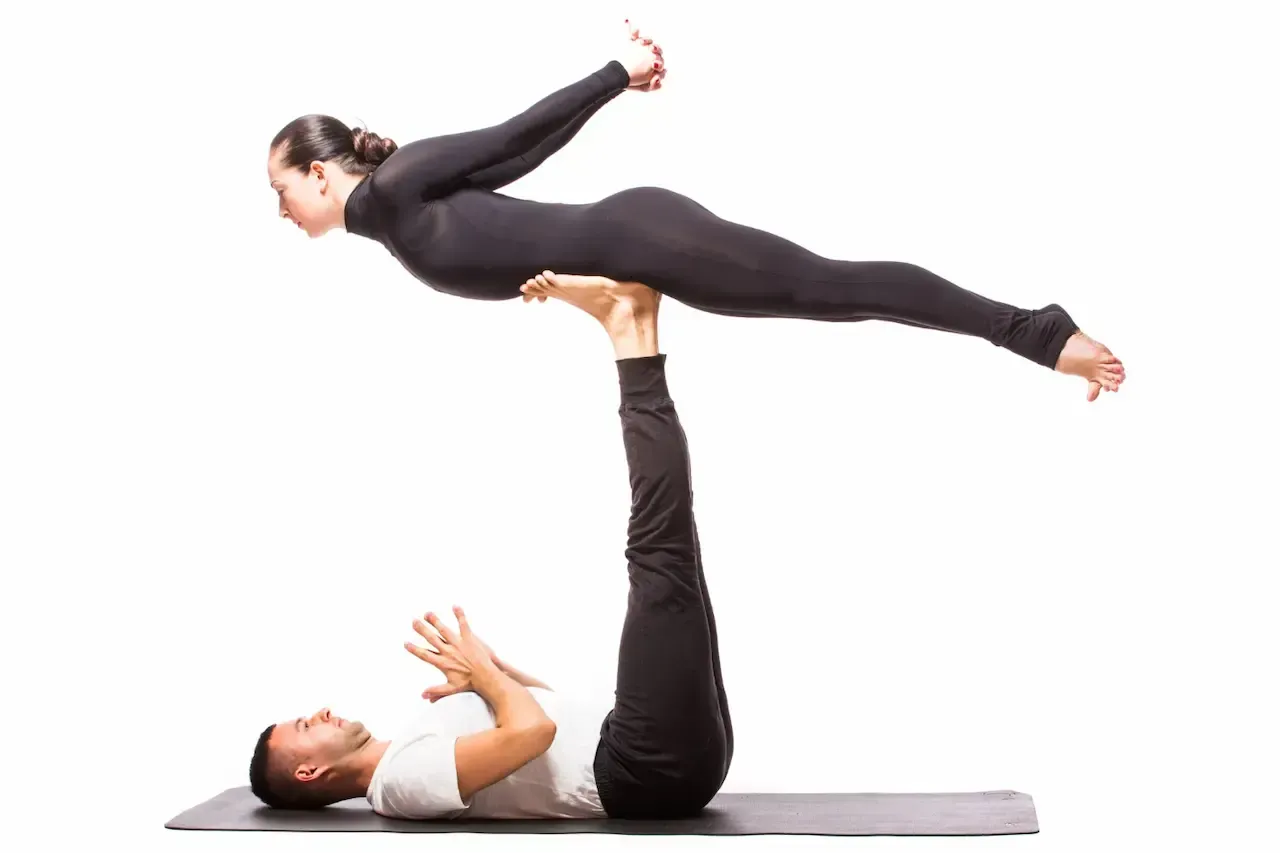
Two partners practicing an acro yoga pose with a base and flyer to build strength at Uptown Yoga in Dallas.

Why Practice Acro Yoga? 


Acro yoga takes elements from yoga and acrobatics and fuses them into a practice all of its own. Think of it as a combination of the athleticism and technique required for safe acrobatics routines and the mindfulness, presence, and breath control that come from yoga. 


Moreover, acro yoga is a partner activity. While your yoga practice can be solitary at times, acro yoga requires at least one partner, and you will need to build trust in each other as you attempt the poses. 


The goal is not only the beautiful expression of an asana. More importantly, perhaps, acro yoga furthers strong connections between the partners that run deeper than the bond you share with other practitioners you happen to meet in the same class every week. 


  • Who Should Consider Acro Yoga? 


Acro yoga has physical and emotional benefits. On the physical side, this practice will help you build strength, balance, and flexibility. You’ll also improve your body awareness as you’re moving with your partner. 


On the emotional or interpersonal side, acro yoga challenges you to think about your movements as a team. Every move you make will influence your partner. Ideally, your movements support each other, but if you haven’t quite developed the required level of trust, you may actually find that you’re throwing each other off balance. 


Don’t worry – like every form of yoga, acro yoga can be practiced at many different levels. However, most people enjoy dipping into acro yoga more once they have developed a solid foundation in a more traditional yoga practice. 


  • How Does Acro Yoga Work? 


We already mentioned that acro yoga requires a small team. In its most basic form, an acro yoga team consists of a base and a flyer. 


The base is the person closest to or on the ground. In many cases, they will be lying with their back on the ground and have their legs and arms extended into the air to support their partner. Sometimes, the base person may also be standing or lying on their belly. In either case, their job is to support the flyer and balance or carry it. 


Also read:  8 Yoga Poses to Boost Energy


The flyer is the person on top of the base, holding one or more points of contact. They could be resting their shoulders on the base’s feet or performing a handstand on the base’s hands or feet. Flyers need strength and excellent body control to allow their base partner to support them. 


In some cases, you may also have a spotter ready to catch a potential fall and prevent accidents. Spotters are essential when you’re first starting or attempting a new pose. 


How Can You Build the Foundations for Acro Yoga? 


Unless you come from an acrobatics or circus arts background, you’ll most likely need to build your own strength before attempting acro yoga. A regular yoga practice, perhaps with a focus on core strength, is a great starting point. 


Once you find it easy to engage your core during your yoga practice, start focusing on asanas that build upper and lower body strength without forgetting about flexibility. Even practices like Yoga Nidra will help you prepare for acro yoga as they increase your ability to be present and move mindfully. 


Practicing with a regular partner is also a great way of building that connection and your trust in each other before moving on to more challenging poses. 


  • Are You Ready to Build Strength and Flexibility? 


If you’d like to try acro yoga in the future, start building your strength and flexibility now. Take a look at our schedule and book a class today. Remember, our instructors are always happy to help you work toward individual goals. Just have a chat before class and see if there are specific variations on asanas that help you progress toward your goal. 


We can’t wait to hear from you – get in touch today! 

Recent Posts

People practicing yoga outdoors during a physical wellness and detox yoga retreat with Uptown Yoga.
November 8, 2026
Discover the physical benefits of yoga retreats for detox. Learn how asanas, breathwork, and meditation support your lymphatic system and liver at Uptown Yoga.
Pregnant woman practicing gentle prenatal yoga on a mat to support physical health at Uptown Yoga.
November 1, 2026
Discover the physical benefits of prenatal yoga during pregnancy. Learn how to improve sleep, increase flexibility, and reduce back pain at Uptown Yoga.
Student using a cork block and strap for support and flexibility during a practice at Uptown Yoga.
October 22, 2026
Discover the physical benefits of using yoga props like blocks, straps, bolsters, and blankets to improve flexibility and support at Uptown Yoga.
Instructor pressing palms together at the heart in Anjali Mudra to show Namaste at Uptown Yoga.
October 8, 2026
Discover the true definition of Namaste in yoga. Learn about the Anjali Mudra, its translation, and the practice of mutual respect at Uptown Yoga.
Instructor guiding a student through a personalized one-on-one private yoga lesson at Uptown Yoga.
June 11, 2026
Discover the physical benefits of hiring a private yoga instructor. Learn how personalized one-on-one yoga lessons can advance your practice at Uptown Yoga.
Instructor leading a group of women in a deep stretch yoga low lunge on mats at Uptown Yoga.
June 10, 2026
Discover deep stretch yoga benefits and learn a simple sequence of targeted poses to release tight muscles, fascia, and connective tissues at Uptown Yoga Dallas.
Woman practicing reclined bound angle pose on a bolster for natural hormone balance at Uptown Yoga.
June 7, 2026
Discover the top 10 yoga practices for balancing your hormones naturally. Learn how poses like Savasana and Bound Angle reduce stress at Uptown Yoga in Dallas.
Yoga trainees sit on mats and take notes in their 250-page training manuals during the lecture.
June 5, 2026
Discover the difference between level 1 and level 2 RYT Vinyasa yoga teacher training. Start your 200-hour path to RYT 500 certification with Uptown Yoga Dallas.
Woman lying on her back on a yoga mat demonstrating Savasana corpse pose at Uptown Yoga.
June 4, 2026
Discover the physical importance of Savasana, or corpse pose, at the end of your yoga practice. Learn how to perform this final pose at Uptown Yoga in Dallas.
Woman studying a binder manual for a 200-hour yoga teacher training certification at Uptown Yoga .
June 2, 2026
Thinking about a 200-hour yoga teacher training? Ask yourself these three essential questions before starting your certification journey at Uptown Yoga in Dallas.
Show More