Benefits of Practicing Backbends Every Day
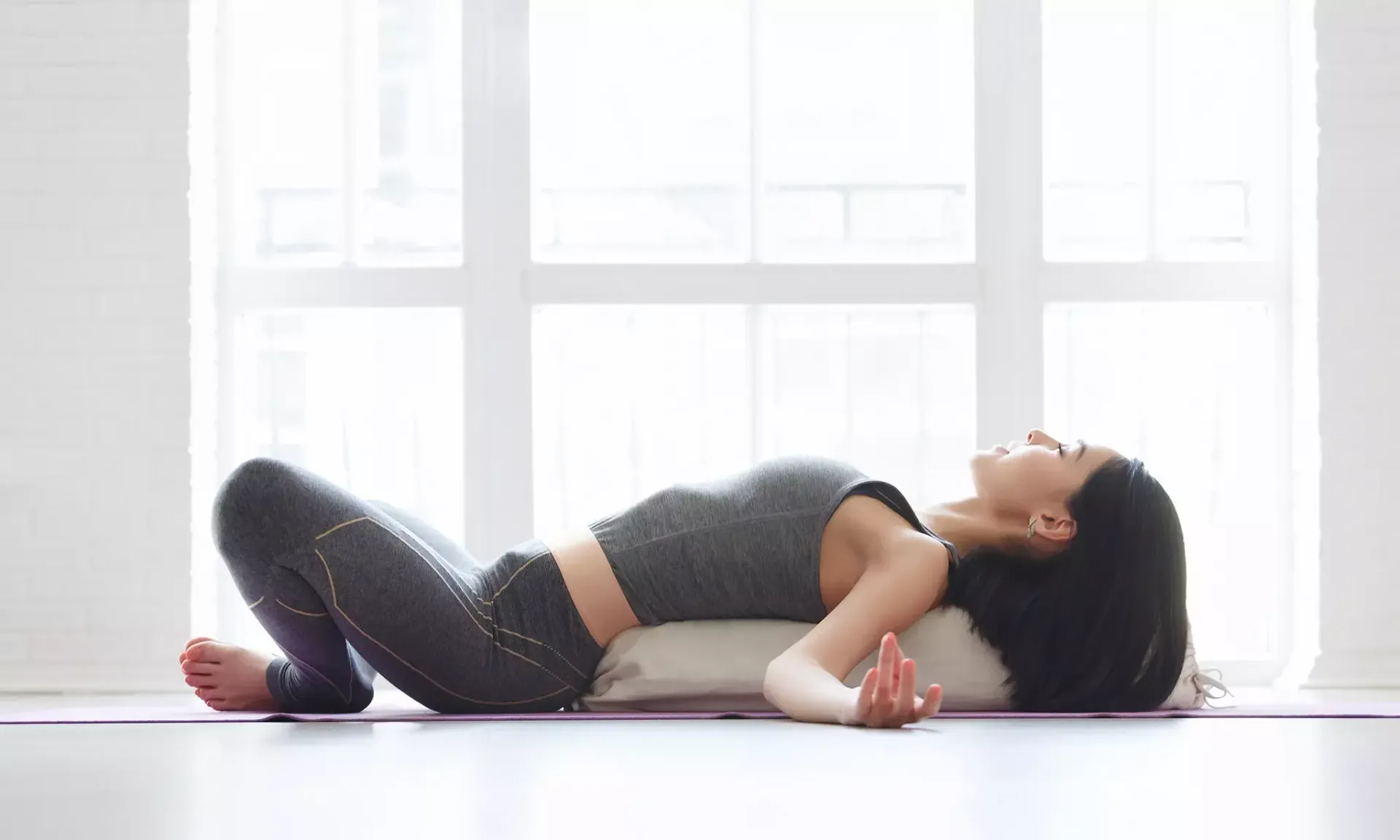
In simple terms, backbends help you
strengthen your spine
while also increasing its flexibility and mobility. If that sounds a little abstract, just imagine that every move you make throughout the day becomes smoother and more controlled if your back is in good shape. Backbends are among the best asanas to establish or maintain that shape and support you throughout the day. That’s why backbends are among the most powerful
asanas
you can practice.
Keeping your spine in great shape can sometimes be easier said than done. Just look at how most of us spend our days – we’re hunched over a screen, typing messages, sitting in meetings – it’s hardly surprising that our backs get achy over time.
Practicing backbends every day can help prevent that achiness. With every backbend, you build the strength and flexibility you need to support your back and neck in front of your computer, walk up a flight of stairs, or play with your kids.
Still not convinced? Here are five more benefits of backbends:
- Backbends can improve your posture
- Backbends stretch your abdominal muscles
- Backbends open your chest, help you breathe more easily, and can improve blood oxygen levels
- Backbends stimulate the heart chakra, making it easier to practice compassion and empathy
- Backbending regularly can alleviate back and neck pain
What Kind of Backbends Can I Practice?
Whenever anyone mentions backbends, many people will immediately think of Urdhva Dhanurasana or wheel pose. That’s a great pose to aim for, but it’s not a great pose to start with if you’ve never practiced backbends. Like other strong (and highly beneficial) poses, this one needs you to invest a little time to build up to it.
If you’re feeling particularly stiff, are new to practicing yoga, have never attempted backbends before, or are recovering from an injury, we recommend a cautious approach. You’ll soon find that some backbends are more easily available to you than others.
One way of thinking about backbends is to divide them into standing, kneeling, or reclining backbends. But we thought it might be easier to divide them into beginner-friendly and more advanced backbends. If you’re joining one of our experienced
instructors for an Uptown Yoga class, we’ll always check on your experience level before class and offer variations that work for you.
Backbends for Beginners
If you’re new to yoga or are recovering from an injury and need to ease yourself back into your practice, try these three poses.
- Cow Pose
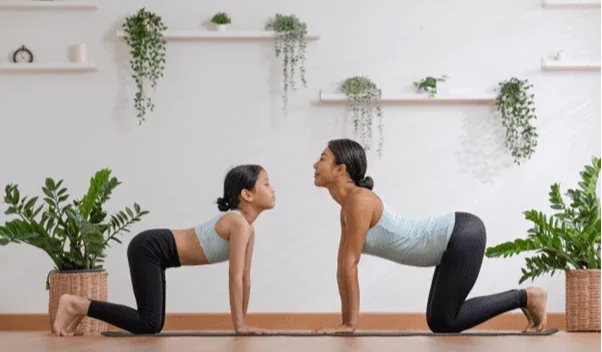
For many yogis, the cow pose is an integral part of their warm-up. This gentle pose starts to relax the spine, increases flexibility, and promotes blood circulation. It also starts to relieve tension and strengthen the muscles in your back. You can practice the cow pose individually or combine it with the cat pose in one flowing movement. Start on all fours with a straight back. On an inhale, extend your belly toward your mat, open your chest, and lift your gaze toward the ceiling. As you exhale, pull your belly button toward your spine and tuck your chin to arrive in cat pose. Repeat a few times, keeping your awareness on any tight areas in your back and neck.
- Cobra Pose
Many practitioners include the cobra pose in their sun salutations. Practicing the pose on its own gives you a chance to focus more on your lower back, stretching and opening your shoulders, and activating abdominal and leg muscles. Lie with your face down on your mat and place the palms of your hands at shoulder height. On an inhale, raise your chest and face, using your hands to support your upper body. Avoid forcing a stronger backbend by pushing too hard with your hands. Your flexibility and strength will grow over time.
Backbends for Intermediate and Advanced Practitioners
If you’re comfortable practicing backbends like cow pose, sphinx, and cobra pose, why not explore more challenging backbends? Remember to move gently, remaining aware of your body’s response. Most poses take a few attempts, and you will find deeper expressions through regular practice.
- Camel Pose
Think of this pose as a bridge between simpler and more challenging backbends. Start by kneeling upright with your toes extended behind you. Place your hands on your lower back, inhale, and arch your back. Push your hips forward. For some, this may be enough. If you can, try reaching one, then two, hands farther down toward the backs of your feet. Tuck your toes to shorten the distance. You can keep your chin tucked or try releasing your neck for a bigger stretch. To release the pose, tuck your chin and lift your head up slowly.
- Wheel Pose
Make sure you attempt this pose toward the end of your practice when you’re fully warmed up and have moved most joints and muscle groups. Lying on your back, bend your knees and bring the soles of your feet close to your buttocks. Your fingertips should just about be able to reach your heels. Bend your elbows and bring the palms of your hands next to or underneath your shoulders with your fingers pointing toward your feet. On your next inhale, press into your palms and feet while lifting your shoulders and hips off the floor. Keep your elbows parallel as you lift your head off the floor. Try to reach your chest toward the wall behind you. If possible, straighten your legs. Remember to breathe. To come down, tuck your chin and lower your body slowly.
A Word of Caution
Backbends are amazing– not only do they have physical benefits, but they can also help you breathe more easily and lift your mood. They’re not to be underestimated, which also means that there is the potential for injury if you try to push too far too fast.
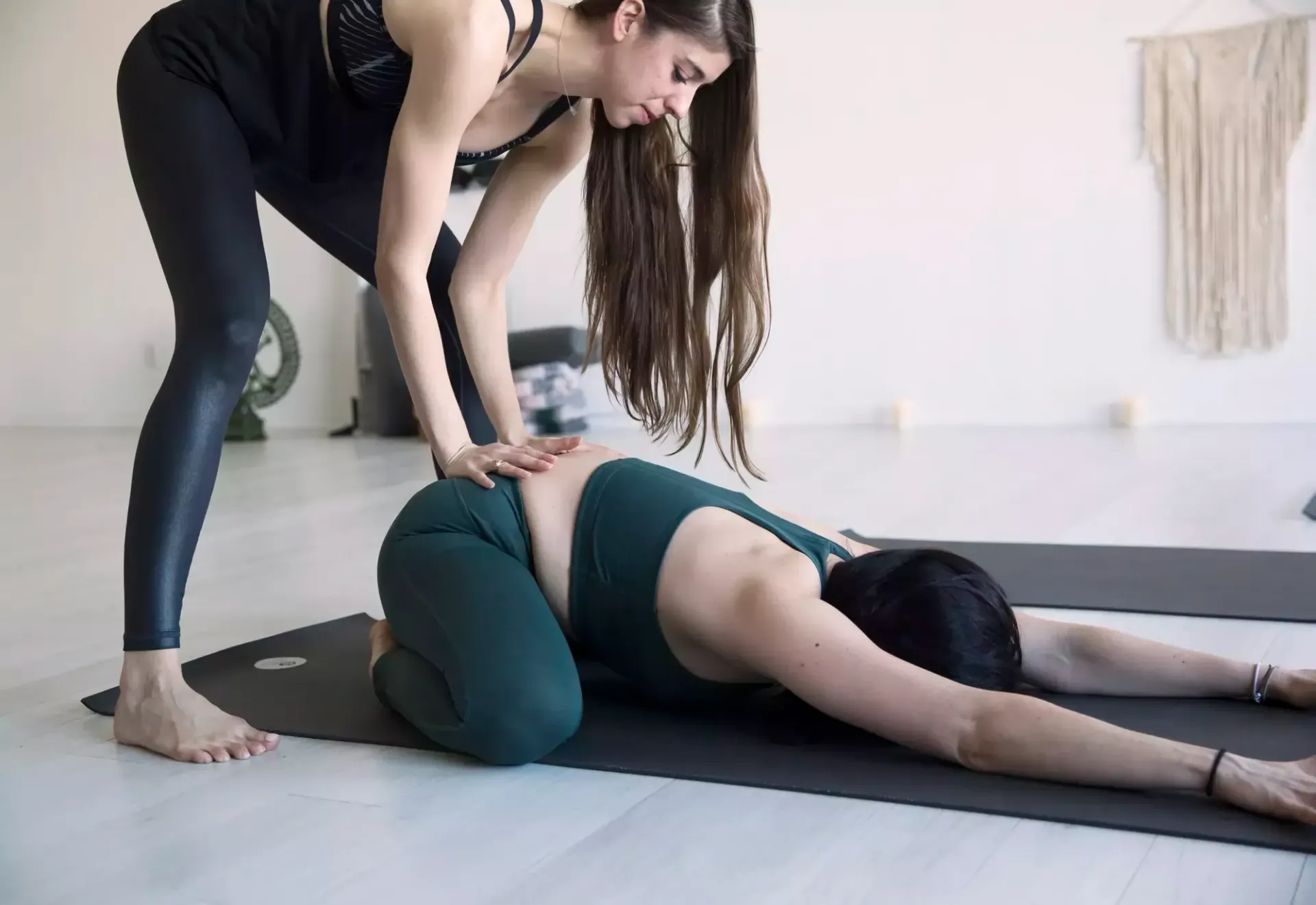
If you’re not sure how far is too far, join a class or consider
hiring a private yoga instructor
if you want to start working on advanced backbends. Don’t force yourself to hold poses for a long time. If you’d like more practice, try repeating the pose once or twice instead.
Lastly, remember that advanced backbends require strong foundations. Practicing poses that support your upper body, open your hips, and strengthen your thighs all help get you closer to your backbending goals.
Would you like to move more freely and get rid of nagging back pain?
Book an Uptown Yoga class today and let your instructor know that you’re especially interested in backbends.