A Beginner’s Guide to Somatic Yoga: Finding Balance
Over the past few years, yoga has taken the world by storm as a way to exercise, tone your body, and get in shape. While this physical side of yoga undoubtedly benefits many practitioners, there is more to this ancient practice.
The power of yoga really unfolds when you connect internal and external awareness. Somatic yoga not only allows you to do that but also helps you resolve long-held tension, let go of unhelpful habits, and even deal with trauma.
What is Somatic Yoga?
The term ‘somatic’ comes from the Greek word ‘soma,’ meaning ‘of the body.’ Your soma registers and stores your emotions. From those, soma creates and expresses habits and thoughts. Over time, those habits become automated, and you may not even notice them.
Here’s a simple example: when you make coffee in the morning, how do you reach for the coffee tin or your espresso capsules? Are your movements rushed and harsh, or are you moving deliberately and mindfully?
How are you holding your coffee cup? Perhaps your hands are supporting it gently, but it’s more likely that your fingers are subconsciously clenching that cup and building unnecessary tension. The more you do this, the more your nervous system sees those habits as normal.
Somatics and somatic yoga are movement practices to help unravel these unhelpful patterns by increasing your internal awareness.
How does Somatic Yoga Differ from Other Forms of Yoga?
Somatic yoga allows you to experience your body through internal awareness rather than focusing on perfect alignment and holding a pose for as long as possible. You’re effectively exploring what it feels like to be in your skin.
When you practice somatic yoga, you bring awareness to how you move, not only on your mat but through your daily tasks. You’re moving with a sense of curiosity and exploration rather than a goal. You’re trying to turn your focus inwards to better understand your nervous system. Are you constantly in a state of high alert, or are you allowing your body and your mind to relax?
Somatic yoga practices can look like stillness, especially if you’re using
guided meditation to connect more closely to internal sensations. If there is movement, it’s often slow and might look imperfect because the focus is on looking inward rather than being perfectly aligned.
What Are the Benefits of Somatic Yoga?
Somatic yoga is an excellent way to gain greater insights into how your body moves and why. The practice lets you identify subconscious movement patterns and habits that express physical and mental stress and could even intensify it.
By drawing your internal awareness to your movement, you’re taking the first step toward changing damaging patterns and behaviors. The benefits resulting from that reach far beyond improved mobility and flexibility.
Holding tension in muscles and joints can lead to chronic pain. Releasing the tension and finding better ways to move helps you manage and even heal chronic pain. You’ll also promote relaxation and lower unhealthy stress responses.
Some practitioners report improved posture as somatic yoga releases muscle tension and corrects imbalances. By relaxing more effectively and moving more mindfully, your mental well-being improves, too, and you’ll notice that your physical and mental wellness become more connected.
Three Somatic Asanas to Practice Today
Somatic yoga is not about achieving perfect alignment or a deeper expression of a pose. Instead, you’re looking to use your movement to draw your focus inward.
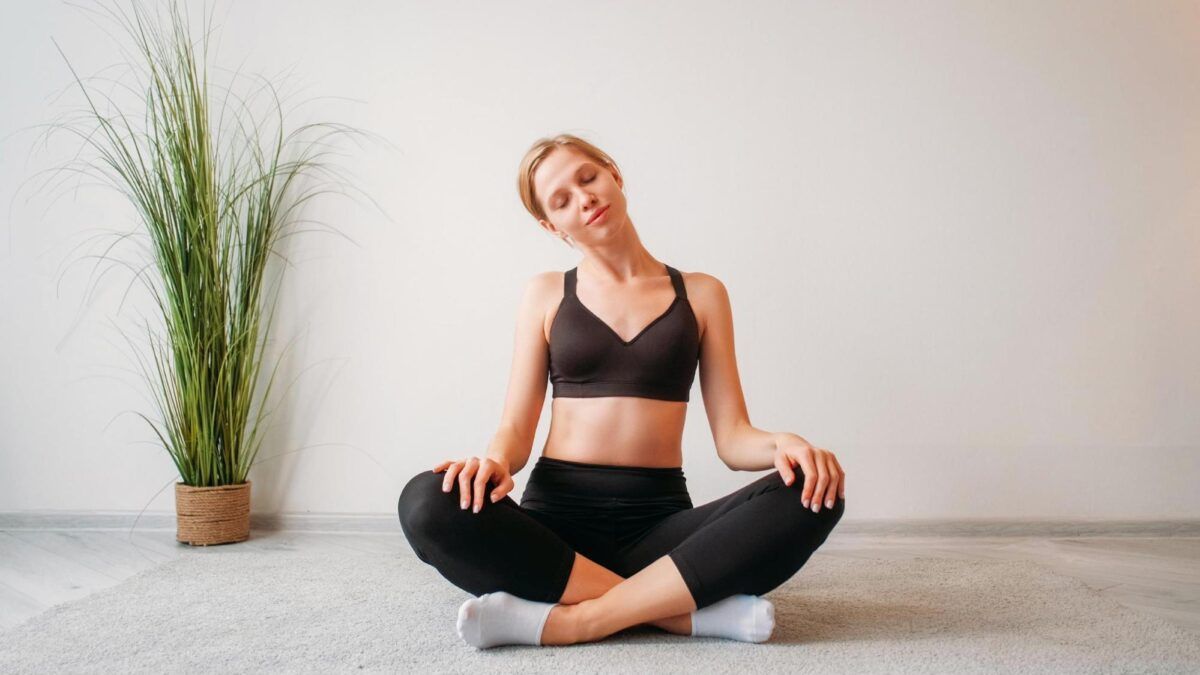
1. Gentle Neck Circles
Find a comfortable seated position, soften your focus, and close your eyes. Imagine a pencil attached to the crown of your head and picture yourself drawing very small circles on the ceiling. Now follow your imagination and move your head in small circles.
Soften your jaw, eyes, and the rest of your face. Feel your movements and note how your spine is feeling with the circles. If the small circles feel too small, try expanding them. Coordinate your movements and your breath, and remember to explore both directions.
2. Seated Side-Body Stretch
Staying in a comfortable seated position, let’s draw attention to your side body. It’s easy to hold on to tension in your sides and not notice it for some time.
From your seated position, place your left hand on your right knee, raise your right arm towards the sky, and then across until you feel the stretch in the side of your body. If you notice any tension, try directing your breath to that area.
Check in with your neck and your spine before gently releasing your stretch. Now repeat on the other side, and don’t be surprised if your left and your right feel different.
3. Moving Bridge
Start by lying on your mat with your knees bent and your feet on the ground. Rest your arms at your sides. Your palms can be facing up or down. Gently rock your pelvis and notice how your lower back feels.
When you’re ready, use your feet and arms to support you as you raise your pelvis, bringing your lower back and the middle of your back off the ground. Observe which muscles are active and support you. Slowly release your spine back on the ground, noticing if your back feels different.
Synchronize your movement and your breathing to observe any differences in how you feel. If there are any highly noticeable physical or mental sensations, give them space to try and release them through your practice.
Join Uptown Yoga Today for a Restorative Yoga Class
Are you ready to let go of unhelpful habits and emotions? Join us for a restorative yoga class at Uptown Yoga today and discover the benefits of somatic movement for yourself.